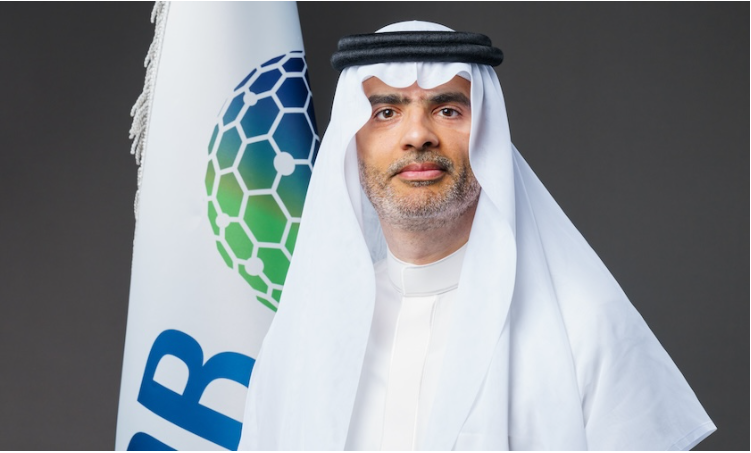
At a recent meeting of the Islamic Development Bank (IsDB) in Algiers, I had the wonderful opportunity to meet Dr. Sami Al-Suwailem, who is the …







At a recent meeting of the Islamic Development Bank (IsDB) in Algiers, I had the wonderful opportunity to meet Dr. Sami Al-Suwailem, who is the current Acting Director General of the IsDB Institute. Among other matters related to the World Zakah and Waqf Forum, I had the opportunity to relate my connection with IsDB/IsDBI. He then requested me to do a write up. Many of my friends and colleagues also ask me about my journey in the founding and establishment of the National Awqaf Foundation of South Africa, also known as Awqaf SA. This article briefly spells out my engagement with this amazing Prophetic institution of waqf and my connection with the IsDB/IsDBI.
Being an active member of the Muslim Youth Movement of South Africa since 1975, the ethos of the MYM was about creating institutions that would fit the notion of Islam being a comprehensive way of life and it involved the creation of institutions that serve the Ummah. In this regard several institutions were created over time in South Africa since the inception of the MYM in the early 1970s. Some of these institutions have grown exponentially. To name a few: the South African National Zakah Fund (SANZAF), the Islamic Medical Asoociation of SA (IMASA), the Association of Muslim Accountants and Lawyers (AMAL), As Salaam School in Braemar, KwaZulu-Natal and more. Although Awqaf SA was seriously conceived towards the end of the year 2000, it had its beginnings with seeds planted in 1984 at the “Management and Development of Awqaf Properties” seminar held in Jeddah under the auspices of the Islamic Development Bank.

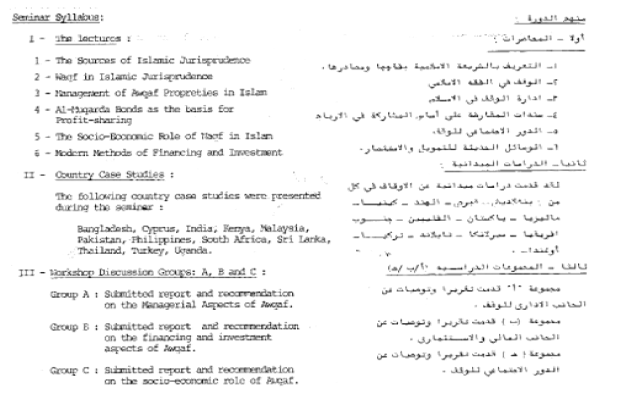
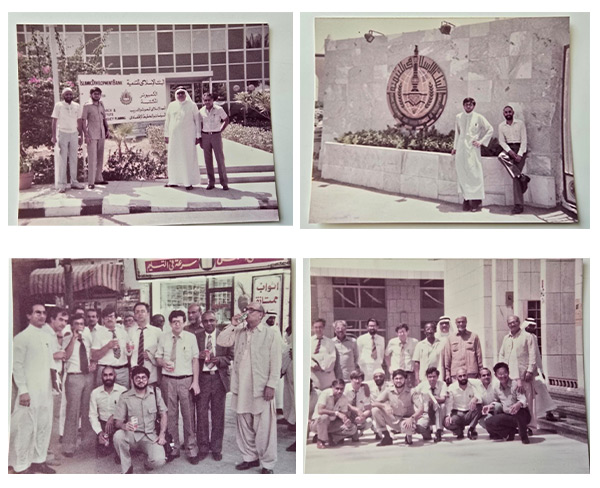
During 1984, Ebrahim Jadwat requested four members to fly to Jeddah to attend a seminar, literally blindfolded. This was to be done at own expense. Hospitality was provided by the host. Iqbal Kolia, Suleman Lockhat (R), Abdul Sataar Gani (R), and I took the responsibility to attend what we came to know as the first English language seminar on waqf. The seminar was organized and hosted by the Islamic Research and Training Institute (IRTI), now known as the Islamic Development Bank Institute (IsDBI). “Management and Development of Awqaf Properties”1 was the theme of the seminar. It was the first time that some of my comrades and I were exposed to this amazing concept and institution of waqf. Several countries, including Bangladesh, Cyprus, Kenya, Malaysia, India, Pakistan, Philippines, Sri Lanka, South Africa, Thailand, Turkey, and Uganda, were represented and provided case studies of their countries’ involvement in the waqf sector.
The lecturers included some of the best brains and internationally renowned personalities and covered some essential topics. These included Dr Muhammad Nejatullah Siddiqi (R) (Sources of Islamic Jurisprudence); Sh Dr Hassan Abdullah Al-Amin (Waqf in Islamic Jurisprudence); Dr Sherafat Ali Hashmi (Management of Waqf: Past & Present); Dr Muhammad Abdul Mannan (The Institution of Waqf: Its Religious and Socio-Economic Roles and Implications); andDr Mohammad Anas Al Zarqa (Some Modern Means for the Financing and Investment of Awqaf Projects); amongst others.
The IsDB/ IRTI seminar was where the seeds of waqf were planted in my mind. The gestation took several years before budding to fruition. The interaction with scholars was brilliant and the knowledge gained about waqf, and the case studies of various countries were phenomenal.

After our arrival back home, several seminars were held in Lenasia, Durban and Cape Town under the auspices of the Association of Muslim Accountants and Lawyers (AMAL). But little was done to implement the waqf system on a community wide basis. A small waqf fund was created within Jaame Limited.
The South African National Zakah Fund in association with the Islamic Development Bank held a seminar on Awqaf & Zakah in Durban during 1-4 September 2000. I was fortunate to be one of the many attendees. It was at this seminar that I remember having a discussion with Shaykh Faaik Gamieldien and Br Fuad Hendricks wherein the idea sparked the imperative of establishing a waqf institution.
Soon after the seminar, another one was organized by the Murabitun under the auspices of Shaykh Abdul Qadir Al Murabit, during 29 September-1 October 2000 at the Council for Scientific and Industrial Research (CSIR) Convention Centre in Pretoria.2 This seminar was titled “Awqaf, Zakah & Dinar”. This conference was the turning point for me. The one person that I thought must attend was our brother leader, the late Dr Shawkat Alli Thokan (R). I called him to accompany me. He gladly accepted. It was while driving to the conference on day 2 that I suggested to him that it was time that we establish a waqf institution. (As was customary in the MYM, anyone that came up with an idea also became his/her baby.) He immediately gave a positive nod, and we discussed it further. Apparently SANZAF had also been discussing the issue, but nothing materialized. Since he was already heading SANZAF, it would have been ideally suited to have the waqf institution housed within SANZAF. He in turn suggested that I prepare a concept / working document, which I duly did in the days that followed. After weeks of discussion and deliberation, he arranged a public presentation under the auspices of the Islamic Research Centre (IRC) which he was also running.
Yours truly did the presentation at the Suliman Nana Memorial Centre, Crosby, Johannesburg on the 27 Ramadan 1421 (23/24 December 2000) to a fair-sized audience. Several friends were invited. In attendance were the late Naz Khota, his brother, cricket commentator Aslam, Sikandar Ayob, Iqbal Kolia, my family, the Thokan family, Ismail Munshi, Rafik Bhayat, Cassiem Khan and many others. Apart from the overhead projector slides that I prepared for the presentation, I also prepared a 2-page article as a handout titled “Awqaf: A Challenge to SA Muslims”3. This article was circulated at the presentation. There was much enthusiasm, applause, and some skepticism. Some even commented that this was a “pipedream”. Dr RAM Salojee (R) was also present and graciously supported the idea. The scene was set. But this would entail a range of tasks and a team of people to start implementing the idea. At that juncture, Cassiem Khan suggested that I prepare a written working document on the presentation that I made. This was duly done and is attached to the book that I embarked upon.4 The following Monday a meeting was held at the Wonder Flooring offices in Johannesburg with Dr Shawkat and Br Akhtar Thokan, both of whom pledged support for the initiative. Had that moral support not come, I doubt any progress would have been made as I could not have done it alone.
In conclusion, the journey is not yet over. This seems to be a lifelong endeavor, not only to ensure the continuation of this formidable institution but also to spread the idea and concept to other countries, particularly in Muslim communities in Africa and elsewhere. In the years that followed, AWQAF SA organized an International Waqf Conference in Cape Town in 2007, in partnership with the Islamic Development Bank and the Kuwait Awqaf Public Foundation. The set of resolutions passed by that conference may be recorded as groundbreaking as it led to further impetus to the worldwide waqf movement. The conference was also followed by having Waqf Cadre Training Seminars for the Southern African Region. These were held in Pretoria, Durban and Cape Town, gratefully also with the support of the IsDB.
Now the greatest challenge facing the Waqf sector is knowledge and education on the ground and to revive the Waqf institution as a major cultural phenomenon. This may be done through school, college, religious seminary, university, and mosque education. This also means training teachers and the multitudes of mosque imams in the wider ideological and philosophical knowledge and underpinnings of the waqf system – that of development, empowerment, and civilization building.
[1] Management and Development of Awqaf Properties, Proceedings of the Seminar held on 7 to 19 Dhul Qada, 1404 (4-16 August 1984), Islamic Research & Training Institute, Islamic Development Bank, Jeddah, Saudi Arabia. 1407H -1987.
[2] Poster of the 7th International Fiqh Conference
[3] Cajee ZA, Awqaf: A Challenge to SA Muslims, December 2000/ Ramadan 1421
[4] Cajee ZA, Towards Muslim Community Empowerment in South Africa – a Proposed Strategy for Change – A Working Document. 2001. See Appendix 1.