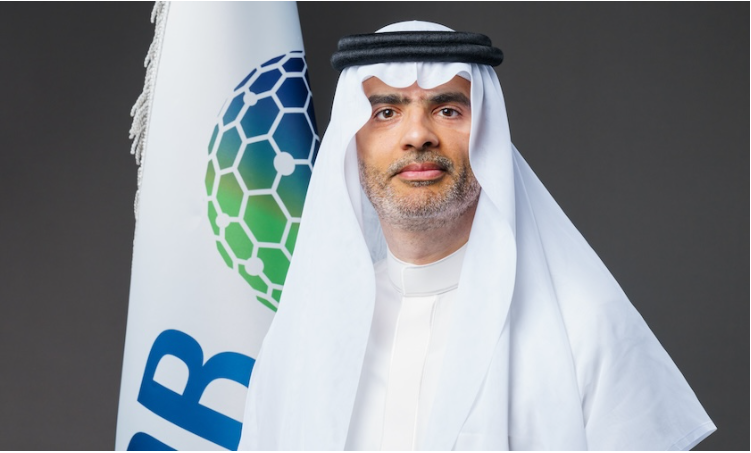
Text of the recorded remarks by Prof. Bambang Brodjonegoro, Dean and CEO, Asian Development Bank, for the Panel Session on Development Traps and Islamic Finance, …






Text of the recorded remarks by Prof. Bambang Brodjonegoro, Dean and CEO, Asian Development Bank, for the Panel Session on Development Traps and Islamic Finance, during the 20th IsDB Global Forum on Islamic Finance, 17 June 2026
It is a true honor to address this forum, even if only by video. I extend my sincere appreciation to Dr. Sami Al-Suwailem and the IsDB Institute for the kind invitation, and my regrets that prior commitments prevent me from joining you in Baku in person. As a former Director General of the Islamic Research and Training Institute, returning to this conversation feels, in many ways, like coming home.

1. Strategic Relevance: The middle-income trap remains the primary developmental challenge facing the IsDB membership today. With nearly 60 percent of our member countries situated in the middle-income bracket, the persistence of this trap is not a marginal issue. It is the central question of development across our region. And it is still inadequately understood, precisely because the resistance to escape comes from within the very structures of these economies themselves. This is not a temporary slowdown that conventional policy can quickly correct. It is a structural condition that demands a structural response.
2. The Nature of the Trap in IsDB Member Countries: Although several IsDB countries have successfully moved from low-income to middle-income status, most continue to operate within low-complexity production systems, with limited movement into high-value-added industries. Manufacturing capability remains weak, innovation lags behind global standards, productivity growth has slowed, and income gaps with developed nations are widening rather than closing. We see this same pattern in parts of Asia. Several middle-income economies in Asia, despite different starting points, face strikingly similar structural constraints, which I have studied closely throughout my career.
3. The Middle-Income Trap is a System Failure, Not a Set of Isolated Problems: The middle-income trap cannot be diagnosed as a series of separate issues. It is the interaction of multiple structural impediments: technological gaps, the underutilization of talent, weak institutions, and excessive reliance on debt finance. These weaknesses are self-reinforcing, locking economies into a low-productivity equilibrium from which conventional policy alone cannot pull them out. The diagnosis must therefore be integrated, and so must the response.
4. The Role of Islamic Finance: This is where Islamic finance offers something genuinely distinctive. We must move beyond viewing Islamic finance as merely an alternative financing instrument. It is, in fact, a full-fledged development framework, intrinsically aligned with the growth of the real sector. Three strategic avenues stand out. First, risk-sharing structures such as muḍārabah and mushārakah stimulate entrepreneurship and innovation precisely where conventional debt finance is too cautious to enter. Second, asset-based financing through sukūk ensures that financial flows remain anchored to productive assets in the real economy. Indonesia’s sustained sovereign sukuk issuance since 2008 has positioned the country as one of the world’s most active sovereign sukuk issuers. In 2018, Indonesia became the first country to issue a sovereign green sukuk, establishing a model for integrating Islamic finance with climate financing and sustainable development initiatives. Third, Islamic social finance, including zakāt and waqf, addresses the structural imbalances and human-capital gaps that no commercial financing can close on its own. Taken together, these three avenues are especially important for economies that have become heavily over-leveraged on the financial side and chronically underinvested on the productive side.
5. The Deteriorating Global Context: The global environment is becoming significantly less forgiving. Lower global growth, faster technological disruption, and increasing fragmentation of trade networks have fundamentally changed the calculus of development. Middle-income economies can no longer rely on the conventional approach of exploiting cheap labor and exporting commodities. The road to advanced-economy status is now narrower and more competitive than at any point in our recent memory.
6. Priorities for Future Action: In this environment, three priorities deserve our urgent attention. First, a productivity revolution, shifting our economies from factor-driven to innovation-driven growth. Second, a restructuring of financial systems, reducing reliance on public debt and expanding equity-based and risk-sharing finance. Third, a deliberate strengthening of institutional capabilities. As I have emphasized in other forums this year, non-economic factors such as strong institutions, credible governance, and social resilience matter just as much as economic policy itself.
7. The Role of Multilateral Institutions: Finally, our multilateral institutions must evolve. The IsDB, the ADB, and our peers can no longer rely solely on the traditional role of financier. We must embrace the role of system orchestrator: mobilizing private capital, supporting policy reforms, promoting regional integration, and building shared knowledge platforms. Development finance institutions today must be much more than just financiers. ADBI stands ready to deepen its partnership with the IsDB Institute on this shared agenda, through joint research, capacity-building, and policy dialogue across our member countries.
The challenges before us are serious, but they are not insurmountable. With the right framework, the right instruments, and the right collaboration, Islamic finance can play a defining role in helping our member countries break free from the middle-income trap and achieve the sustainable prosperity that this Forum so rightly places at its center. I look forward to the insights of my fellow panelists, and I wish the 20th IsDB Global Forum every success.
Thank you. Wassalāmu’alaikum warahmatullāhi wabarakātuh.